Belarus: Welcoming important developments in the fight against unjust HIV criminalisation

HIV JUSTICE WORLDWIDE along with our partners at The Eurasian Women’s Network on AIDS and Global Network of People Living with HIV (GNP+) welcome this week’s announcement of an amendment to Article 157 of the Criminal Code of the Republic of Belarus, which finally allows consent following disclosure to sexual partner as a defence. Whilst recognizing there is still a long way to go to remove all unjust criminal laws against people living with HIV in Belarus, we congratulate our partners and colleagues in Belarus People PLUS for this achievement!

Today, Parliamentarians of the House of Representatives of the National Assembly of the Republic of Belarus adopted in the second reading three bills, one of which was the law “On introducing amendments to some codes of the Republic of Belarus”. Among other changes, an amendment was adopted to article 157 of the Criminal Code of the Republic of Belarus (one of the most draconian HIV-specific criminal laws in the world), which now allows that people who have warned their partners will no longer be held criminally responsible for potential or perceived HIV exposure or transmission.

Read Yana’s story on GNP+’s website

Until today, Article 157 states that people living with HIV are totally criminally liable for potential or perceived HIV exposure or transmission, even if the so-called injured party had no complaints against their partner, knew about the risks and consented. Prosecutions took place because infectious disease doctors informed police and many people were convicted (read Yana’s story here)

In 2017, 130 criminal cases were initiated under Article 157 of the Criminal Code of the Republic of Belarus, with another 48 in the first half of 2018. Now, it will be possible to revisit those cases.

Anatoly Leshenok, representative of the NGO, People Plus states: “The adopted changes are only the first step in achieving our goal of decriminalising HIV transmission. According to information received from the department for drafting bills, other, more fundamental changes to Article 157 of the Criminal Code of Belarus have not been approved. It is necessary to continue to work with these State structures and with public opinion in order to form a more tolerant attitude towards HIV-positive people. But those changes that have been adopted today –  that’s a success for our team! ”

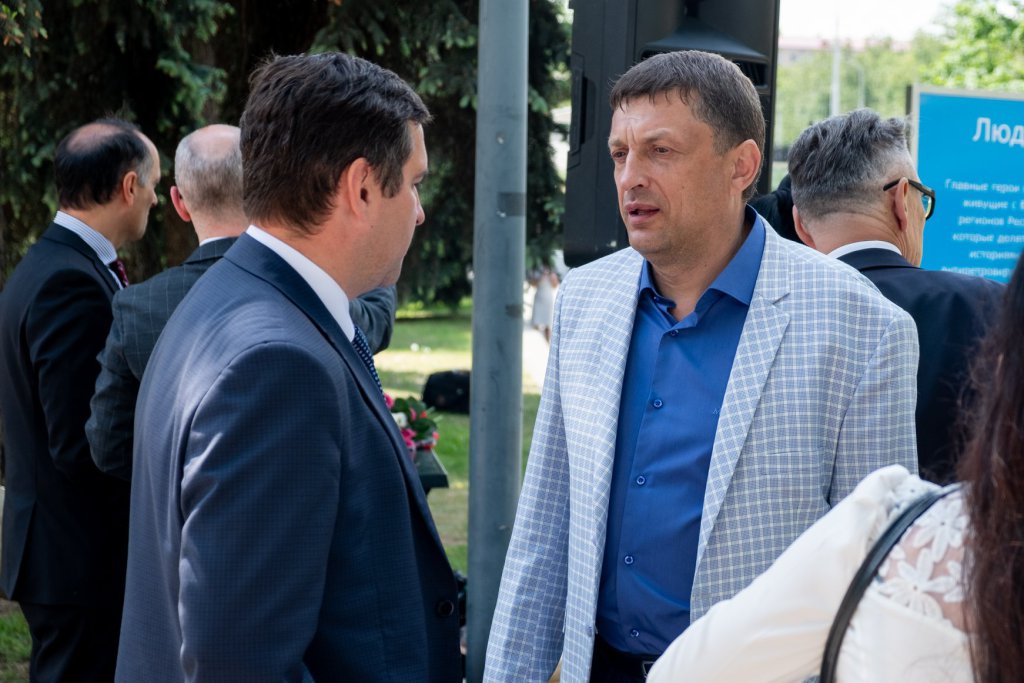
Anatoly Leshenok. Photo: UNAIDS Country Office in Belarus

After approval by the Council of the Republic and the President, the amendments will make it possible to revisit previous sentences of the courts, and improve lives of people that were broken previously, as well it provide opportunity now and in the future for people living with HIV in serodiscordant partnerships to plan their lives without worrying if they are criminals every time they have sex.


Kenya: Positive Justice campaign launched today to challenge unjust HIV-specific law

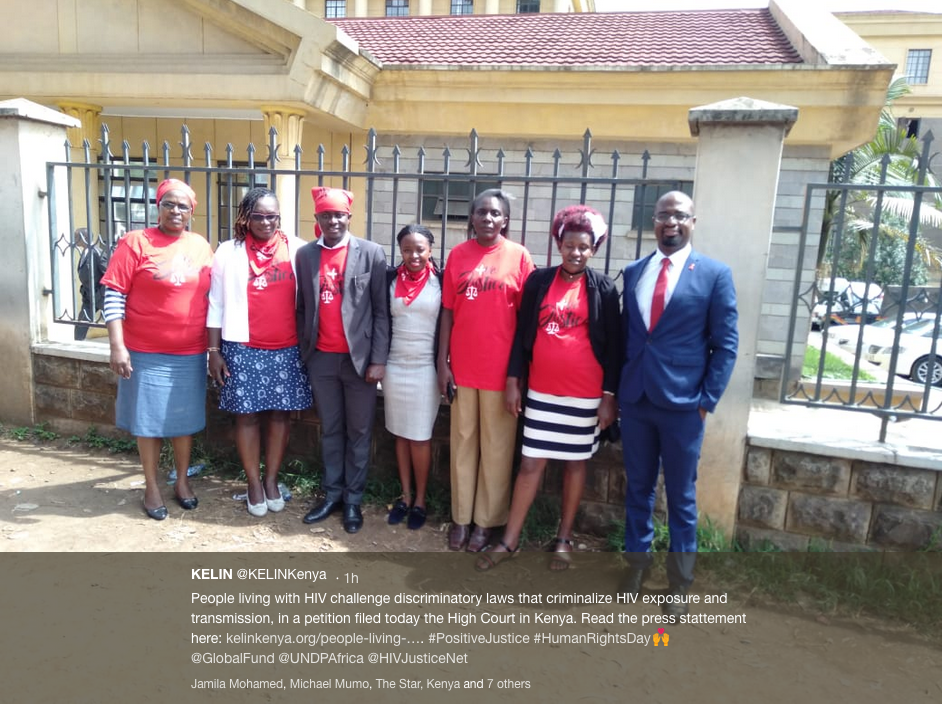
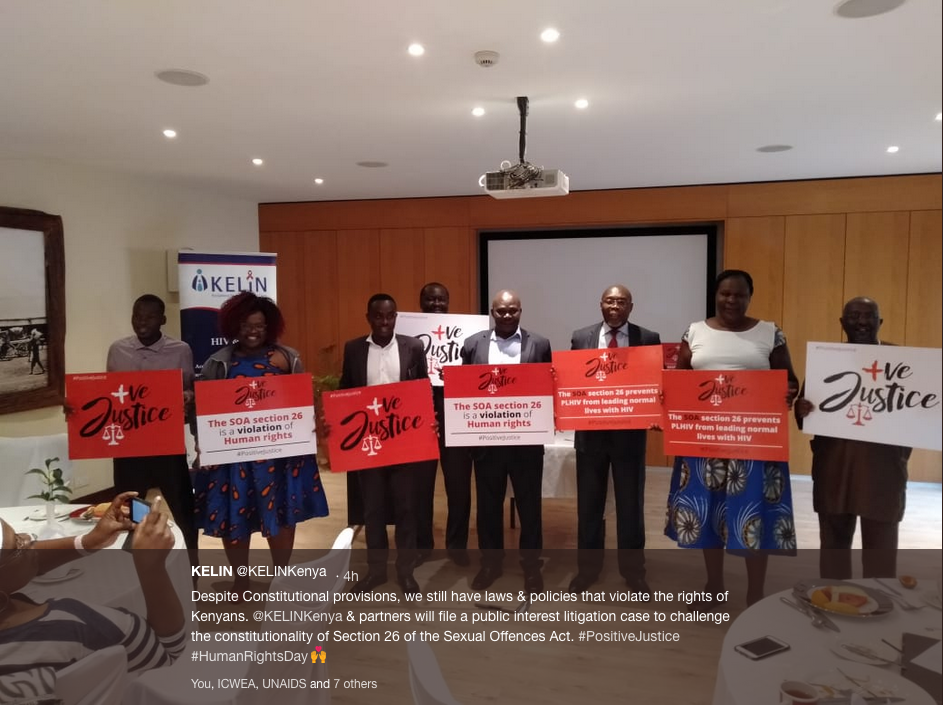
Today, on International Human Rights Day, the National Empowerment Network of People living with HIV/AIDS in Kenya (NEPHAK) and the Kenya Legal and Ethical Issues Network on HIV and AIDS (KELIN) have launched the Positive Justice campaign to finally end HIV criminalisation in Kenya.

Today's Positive Justice launch (photo: @KELIN via Twitter)
Today’s Positive Justice campaign launch (photo: @KELINKenya via Twitter)

In 2015, in Aids Law Project v Attorney General and Others [2015] the High Court of Kenya declared section 24 of the HIV and AIDS Prevention and Control Act unconstitutional and suspended the law. The High Court ruling focused on the absence of a definition for “sexual contact”, holding that it is impossible to determine what acts were prohibited. It also found the provision does not meet the standards for a justifiable limitation of the constitutional right to privacy.

However, Section 26 of the Sexual Offences Act (2006) still contains vague and overly broad provisions that have resulted in a number of recent arrests and unjust prosecutions for biting (March 2018), breastfeeding (September 2018), and alleged non-disclosure (December 2018).

Today’s Positive Justice campaign launch (photo: @KELINKenya via Twitter)

Consequently, today KELIN have filed a petition asking the High Court in Nairobi to strike down as unconstitutional Section 26 of the Sexual Offences Act on the grounds that it discriminates against people living with HIV, women, and the poor, and violates a number of fundamental human rights.

Download and read Petition 447 – which will be heard on 4th March 2019 for directions  – at this link: http://www.kelinkenya.org/wp-content/uploads/2018/12/Petition-447-of-2018-Final.pdf

According to a KELIN press release published today

The prosecuting authority’s interpretation of Section 26 of the Sexual Offences Act, as demonstrated by the prosecutions of several of the PLHIV challenging the law, effectively makes it a crime for a woman with HIV to birth and raise children. The prevailing interpretation also effectively criminalizes marriage between a person who has HIV and a person who does not.

“Laws that make criminals of people simply for having HIV ignore science. People who are on HIV treatment and are virally suppressed are not infectious. The key to a successful HIV response and ending AIDS is making sure everyone with HIV knows their status and gets on treatment. These laws make that impossible. Thousands of discordant couples and breastfeeding mothers living all over Kenya run the risk of being arrested and charged under this provision if they come forward for HIV testing,” noted M.A, the fourth petitioner and a representative of the Discordant Couples in Kenya.

HIV criminalization laws are also notorious for abuse and arbitrary enforcement. “Such abuse will always be targeted at persons living with, vulnerable to or believed to be living with HIV whether or not their actions were culpable and whether or not their actions exposed another to the risk of contracting HIV,” cautioned Mr. Nelson Otwoma, the Director at the National Empowerment Network of People living with HIV/AIDS in Kenya (NEPHAK).

It is for this reason that five people living with HIV and stakeholders working in HIV response came together to file the petition and launch the campaign dubbed Positive Justice. The campaign seeks to raise awareness on the negative effects of enforcement of the law on PLHIV, and engage relevant stakeholders including the media, legislature, judiciary, law enforcers, and Ministry of Health in advocating for the rights of people living with HIV.

“This petition will not only safeguard the rights of those living with and affected by HIV and other sexually transmitted infections but also help alleviate the discrimination and stigma they face and help Kenya remain on track in achieving the 2020 UN AIDS Fast Track targets in ending AIDS,’ said Mr. Allan Maleche, the Executive Director at KELIN.

Uganda: New efforts underway in Uganda to challenge HIV legislation, especially its provisions on the disclosure of HIV status

Kampala, Uganda | IAN KATUSIIME | Rosemary Namubiru, a nurse, was in 2014 sentenced to three years in jail for criminal negligence over what seemed a potential infection of a baby with HIV the virus that causes AIDS. Her crime was that as an HIV positive nurse, she placed the life of a baby in danger when she pricked herself with an injection she was administering.

Eurasian Women's Network on AIDS launches awareness campaign to draw attention to HIV criminalisation in EECA region

Eurasian Women’s Network on AIDS is launching the “HIV Is Not a Crime” information campaign

The Eurasian Women’s Network on AIDS is launching the “HIV Is Not a Crime” awareness campaign, which aims to draw attention to the situation with the criminalization of HIV transmission in the Eastern Europe and Central Asia region. Within the campaign, we expect to hold discussions with activists and human rights defenders who will enhance their professional level, moreover, we will take efforts to change public opinion on the topic of criminalization.

We will focus on the following issues:

– Why does the criminalization of HIV transmission not solve the problem of the HIV spread?

– Why criminalization violates human rights?

– How are criminalization and gender related?

– How a person who is charged with transmitting HIV can defend themselves?

– … And many more questions, that you can write to us in the comments and send by letters and messengers.

The campaign “HIV Is Not a Crime” is one of the components of the “Chase Virus, Not People” campaign of EECA region community networks, which reflects the criminalization of HIV as one of the key barriers to access to treatment and support, conducive to an increase in new HIV/AIDS cases and mortality, and also being a violation of human rights.

The information campaign “HIV Is Not a Crime” is held within the framework of the project “HIV Criminalization Scan”, supported by the Global Network of People Living with HIV (GNP+). The project was launched in 2017 and produced an analytical report on the situation with the criminalization of HIV transmission in 9 countries of the EECA region, published in January 2018, as a preliminary result. You can read the report and cases in the “Criminalization” section on page “Our projects” page of www.ewna.org website.

The campaign is supported by the East Europe and Central Asia Union of People Living with HIV (ECUO) and the Minusvirus.org online platform


US: Coalition of US organisations and networks issue Call to Action for HIV Criminal Law Reform grounded in racial justice

Call to Action for Racial Justice in HIV Criminal Law Reform

A coalition of racial justice, HIV, and criminal justice organizations and networks have come together to issue this Call to Action in support of an HIV criminal law reform movement that is grounded in racial justice and leaves no one behind.

The collaboratively drafted Consensus Statement on HIV “Treatment as Prevention” in Criminal Law Reform was launched in July 2017[1] in response to uncertainty about the most effective way to incorporate modern HIV treatment advances, reflected in the Undetectable=Untransmittable campaign, into efforts to reform HIV criminal laws.

Since then, the urgency of this question has only intensified: changes in North Carolina, Canada andSweden have all hinged on whether or not a person is virally undetectable. Many states continue to grapple with how or if U=U should be used as an essential element in advocacy for HIV criminal law reform. Some argue that eliminating criminal liability for those who can document regular health care engagement and consistently low viral load is an improvement that is better than no progress at all.

However, HIV justice in the criminal legal system cannot be achieved without racial justice. Particularly with the well-documented racism in the U.S. criminal legal system, justice demands interrogation of the harms inherent in relying on U=U as a vehicle for HIV criminal law reform.

Modern, consistent treatment and care has significantly improved the lives of people living with HIV, whose life expectancies are now similar to HIV-negative people. However, fewer than half of all PLHIV in the US have sustained viral suppression.[2] Any reform that uses viral detectability as a litmus test for criminal liability leaves a majority of PLHIV behind and creates a viral underclass of PLHIV whose increased risk of prosecution effectively gets a current-day seal of approval.

If we look at this general statistic more closely, disturbing patterns emerge. National data show unequivocally that there are significant racial disparities in treatment access and sustained viral suppression. The most recent comprehensive analysis showed that Black PLHIV had the lowest level of sustained viral suppression across the board — 40.8% as compared to 56.3% of whites and 50.1% of Hispanics.[3]

Racial and regional disparities are reflected in every study that examines the experiences and outcomes of Americans who pass through our criminal legal and healthcare systems. The South, which experiences the highest regional burden of HIV in the U.S., also has the greatest number of people who are uninsured. At the same time, nine of the ten states[4] with the highest rates of incarceration are also in the South. Across the country Black people are disproportionately targeted and harmed at every stage of the criminal legal system, from policing to incarceration and sentencing.[5]

Any HIV criminal law reform effort that relies on viral suppression will inevitably leave behind Black PLHIV who face the greatest harm from the intersecting injustices of the U.S. criminal legal system and inequitable treatment access. We must not only acknowledge these inequities in our efforts but also actively seek to challenge and dismantle them in our calls for change.

As the HIV criminal law reform movement continues to grow and more states mobilize for reform, we must hold ourselves accountable to our communities and to each other. In recent years, four states have passed measures amending their HIV criminal laws or health code,[6] and we know there are new legislative actions on the horizon — this past legislative session saw at least five HIV criminal law bills.

We issue this Call to Action with the understanding that state coalitions often face difficult decisions and options that may reduce harm or appear to reduce harm in the short-term, but can also have unintended negative consequences in the long-term, or for those who are most frequently targeted by law enforcement. Our hope is that advocates will continue to learn from one another and pursue the best possible outcomes in their states while maintaining a commitment to strategies for reform which advance racial, economic, and gender justice.

Take action:

  1. Endorse the Consensus Statement on HIV “Treatment as Prevention” in Criminal Law Reform.
  2. Share the Consensus Statement as a tool and resource to support conversations around treatment access, HIV criminal law reform, and racial justice.
  3. Educate on the personal empowerment and critical importance of U=U and other scientific advances in HIV as tools for reform rather than heart of reform.
  4. Advocate for an HIV criminal law reform strategy which is accountable to all of the communities it affects.

The following organizations join this Call to Action: 

The Black AIDS Institute

The Center for HIV Law and Policy

The Counter Narrative Project

Positive Women’s Network

Prevention Access Campaign/U=U

The SERO Project

NOTES:

[1] Original launching endorsers included the Center for HIV Law and Policy, Prevention Access Campaign/U=U, The Counter Narrative Project, Treatment Action Group, Women With a Vision, National Association of Criminal Defense Lawyers, National Center for Transgender Equality, The National LGBTQ Task Force, PFLAG, and Housing Works.

[2] This refers to PLHIV who have received a diagnosis.https://www.cdc.gov/mmwr/volumes/67/wr/mm6704a2.htm

[3] This CDC analysis included 38 reporting jurisdictions, accounting for a total of 651,811 PLHIV.  (2018)

[4] Florida, Georgia, Texas, Mississippi, Arkansas, Alabama, Louisiana, Missouri, Oklahoma. The other state is Arizona. https://www.usnews.com/news/best-states/slideshows/10-states-with-the-highest-incarceration-rates?slide=10 (2017)

[5] Georgia demonstrates the synergistic interaction of racial disparities across these different systems:

[6] IA, CO, CA, NC


Bringing Science to Justice: End HIV Criminalisation Now

News Release

Networks of people living with HIV and human rights and legal organisations worldwide welcome the Expert Consensus Statement on the Science of HIV in the Context of Criminal Law

Amsterdam, July 25, 2018 — Today, 20 of the world’s leading HIV scientists released a ground-breaking Expert Consensus Statement providing their conclusive opinion on the low-to-no possibility of a person living with HIV transmitting the virus in various situations, including the per-act transmission likelihood, or lack thereof, for different sexual acts. This Statement was further endorsed by the International AIDS Society (IAS), the International Association of Providers of AIDS Care (IAPAC), the Joint United Nations Programme on HIV/AIDS (UNAIDS) and 70 additional experts from 46 countries around the world.

The Expert Consensus Statement was written to both assist scientific experts considering individual criminal cases, and also to urge governments and criminal justice system actors to ensure that any application of the criminal law in cases related to HIV is informed by scientific evidence rather than stigma and fear. The Statement was published in the peer-reviewed Journal of the International AIDS Society (JIAS) and launched at a critical moment during the 22nd International AIDS Conference, now underway.

“As long-time activists who have been clamouring for a common, expert understanding of the current science around HIV, we are delighted with the content and widespread support for this Statement,” said Edwin J Bernard, Global Co-ordinator of the HIV Justice Network, secretariat to the HIV JUSTICE WORLDWIDE campaign. “Eminent, award-winning scientists from all regions of the world have come together to provide a clarion call for HIV justice, providing us with an important new advocacy tool for an HIV criminalisation-free world.”

The Statement provides the first globally-relevant expert opinion regarding individual HIV transmission dynamics (i.e., the ‘possibility’ of transmission), long-term impact of chronic HIV infection (i.e., the ‘harm’ of HIV), and the application of phylogenetic analysis (i.e., whether or not this can be used as definitive ‘proof’ of who infected whom). Based on a detailed analysis of scientific and medical research, it describes the possibility of HIV transmission related to a specific act during sexual activity, biting or spitting as ranging from low to no possibility. It also clearly states that HIV is a chronic, manageable health condition in the context of access to treatment, and that while phylogenetic results can exonerate a defendant when the results exclude them as the source of a complainant’s HIV infection, they cannot conclusively prove that one person infected another.

“Around the world, we are seeing prosecutions against people living with HIV who had no intent to cause harm. Many did not transmit HIV and indeed posed no actual risk of transmission,” said Cécile Kazatchkine, Senior Policy Analyst with the Canadian HIV/AIDS Legal Network, a member and key partner organisation of the HIV JUSTICE WORLDWIDE campaign. “These prosecutions are unjust, and today’s Expert Consensus Statement confirms that the law is going much too far.”

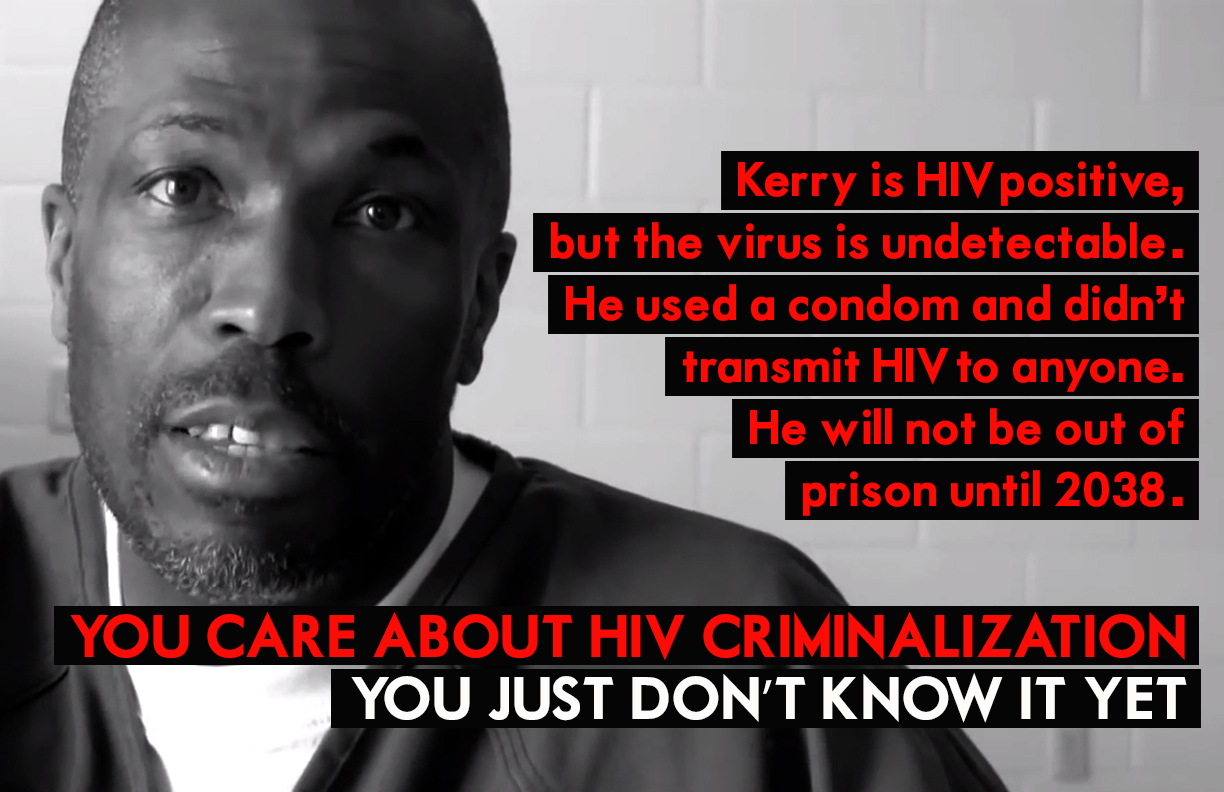
Countless people living with HIV around the world are currently languishing in prisons having been found guilty of HIV-related ‘crimes’ that, according the Expert Consensus Statement, do not align with current science. One of those is Sero Project Board Member, Kerry Thomas from Idaho, who says: “I practiced all the things I knew to be essential to protect my sexual partner: working closely with my doctor, having an undetectable viral load, and using condoms.  But in terms of the law, all that mattered was whether or not I disclosed. I am now serving a 30-year sentence.”

FINAL_KERRY_NOT-A-CRIME-POSTERWhile today’s Statement is extremely important, it is also crucial to recognise that we cannot end HIV criminalisation through science alone. Due to the numerous human rights and public health concerns associated with HIV criminalisation, UNAIDS, the Global Commission on HIV and the Law, the UN Committee on the Elimination of Discrimination against Women, and the UN Special Rapporteur on the Right to Health, among others, have all urged governments worldwide to limit the use of the criminal law to cases of intentional HIV transmission. (These are extremely rare cases wherein a person knows their HIV-positive status, acts with the intention to transmit HIV, and does in fact transmit the virus.)

We must also never lose sight of the intersectional ways that — due to factors such as race, gender, economic or legal residency status, among others — access to HIV treatment and/or viral load testing, and ability to negotiate condom use are more limited for some people than others. These are also the same people who are less likely to encounter fair treatment in court, within the medical system, or in the media.

“Instead of protecting women, HIV criminalisation places women living with HIV at increased risk of violence, abuse and prosecution,” says Michaela Clayton, Executive Director of the AIDS and Rights Alliance for Southern Africa (ARASA). “The scientific community has spoken, and now the criminal justice system, law and policymakers must also consider the impact of prosecutions on the human rights of people living with HIV, including women living with HIV, to prevent miscarriages of justice and positively impact the HIV response.”

HIV criminalisation is a pervasive illustration of systemic discrimination against people living with HIV who continue to be stigmatised and discriminated against on the basis of their status. We applaud this Statement and hope it will help end HIV criminalisation by challenging all-too-common mis-conceptions about the consequences of living with the virus, and how it is and is not transmitted. It is indeed time to bring science to HIV justice.

To read the full Expert Consensus Statement, which is also available in French, Spanish and Russian in the Supplementary Materials, please visit the Journal of the International AIDS Society at https://onlinelibrary.wiley.com/doi/full/10.1002/jia2.25161

VIsit the HIV JUSTICE WORLDWIDE website to read a short summary of the Expert Consensus statement here: http://www.hivjusticeworldwide.org/en/expert-statement/

To understand more about the context of the Expert Consensus Statement go to: http://www.hivjusticeworldwide.org/en/expert-statement-faq/

HIV JUSTICE WORLDWIDE is a growing, global movement to shape the discourse on HIV criminalisation as well as share information and resources, network, build capacity, mobilise advocacy, and cultivate a community of transparency and collaboration. It is run by a Steering Committee of ten partners AIDS Action Europe, AIDS-Free World, AIDS and Rights Alliance for Southern Africa (ARASA), Canadian HIV/AIDS Legal Network, Global Network of People Living with HIV (GNP+), HIV Justice Network, International Community of Women Living with HIV (ICW), Southern Africa Litigation Centre (SALC), Sero Project, and Positive Women’s Network – USA (PWN-USA) and currently comprises more than 80 member organisations internationally.

Beyond Blame symposium highlights intersectionality of issues related to HIV criminalisation at AIDS 2018

Strategies to oppose the unscientific criminalisation of HIV transmission received a high profile at events in advance of the 22nd International AIDS Conference (AIDS 2018) in Amsterdam this week.

These included the launch by the Global Commission on HIV and the Law of a Supplement to its 2012 Report, Risks, Rights & Health, and the HIV Justice Worldwide symposium, Beyond Blame: Challenging HIV Criminalisation.

Read more at aidsmap.com

FOCUS ON EECA: Is Belarus the worst country in the world for HIV criminalisation?

Photo: Representatives of People PLUS at the Gomel Regional Court
Our EECA hub, the Eurasian Women’s Network on AIDS (EWNA), part of the GNP+ family, found that between January 2015 and June 2017, 128 criminal cases had been prosecuted under Article 157, Belarus’ overly broad HIV-specific criminal law.

The highest number of cases in the country were reported in the Gomel region. Between 2012 and 2016, 38 cases were reported. But in the first half of 2017 alone, at least 50 cases had been filed before the courts.

The vast majority of the cases involve people in heterosexual relationships. The law is understood and applied in a way that a person living with HIV not only has a duty to disclose, but also a duty to not place another person at risk of acquiring HIV. While some cases brought to the courts involve allegations of non-disclosure, a large number of cases are between couples of different HIV status, where both parties were aware of HIV in the relationship, and the HIV-negative partner consented to sex.

Charges are laid by the state and are regardless of the partner’s desire to prosecute and regardless of whether protective measures were taken by the person living with HIV, such as using a condom or being on treatment with a low or undetectable viral load. 

Cases typically commence when health care providers hear that an HIV-negative person is in a sexual relationship with a person living with HIV, or when a pregnancy is involved. In order to be charged, all that is required is for the person living with HIV should know their HIV status and be registered with the state for HIV services.

As per community reports, people living with HIV are not getting the proper treatment, care and support that they need because of the legal barriers that Article 157 creates in the lives of people living with HIV.

In practice, the law in Belarus keeps people who learn anonymously of their HIV status from accessing treatment, education and counselling because people in Belarus can know about their HIV status and not be registered. Without being formally aware of the presence of HIV, then a person can avoid is not criminally liable. When people face the threat of criminalisation, ignorance of the diagnosis of HIV can be the most effective legal protection. 

Crucially, people who are not registered as living with HIV with the state do not receive antiretroviral treatment and therefore endanger themselves and their sexual partners.

Building the case against criminalisation on the ground

People PLUS is a public association representing people living with HIV in Belarus.

It provides counselling to clients/patients – helping them to “correctly” answer questions and complain against forced examination during epidemiological investigations from the Ministry of Health, as well as the Ministry of Internal Affairs. This has been a positive experience with, over the past month, two refusals to initiate criminal cases.

In the Gomel region – where the highest number of cases under Article 157 of the Criminal Code of the Republic of Belarus are being reported – People PLUS have held meetings with the heads of the Epidemiological Department – the “sources” of initiating criminal cases in the region.

An agreement was reached, that without violating guidelines (according to a Ministerial Agreement the Epidemiological Department has to send cases of transmission to the Ministry of Internal Affairs for further investigation), the people under investigation will be immediately provided with People PLUS contacts in order to obtain advice on how to protect themselves during an investigation.

As a result, there was a 40% decrease in the number of criminal prosecutions in the country (19 for the 1st quarter of 2018) and 49% for the Gomel region (12 for the first quarter of 2018), compared to 2017.

People PLUS notes that in the criminal laws of other countries there is the possibility of a person living with HIV to be released from criminal liability if they disclose and receive consent from another person and/or took appropriate measures to greatly reduce the risk of transmission. The application of this rule, as prescribed in the law, will protect the rights and interests of people living with HIV in Belarus. Though ultimately, this is not enough to counteract the damage to the HIV response caused by criminalisation.

A proposal on introducing similar amendments to Article 157 put forward by People PLUS was discussed at a recent meeting of the Parliamentarian Commission on Health, Physical Culture, Family and Youth Policy. The Ministry of Health of the Republic of Belarus sent a letter to the Parliament in support of the initiative. The Commission decided to submit it for discussion in the autumn session of the Parliament.

People PLUS have arranged a meeting with the Chairman of the Gomel Regional Court, S.M. Shevtsov, in order to reduce the number of ongoing cases and to get support to further changes in legislation.

Parliamentary hearings are expected to take place in Autumn 2018.

Download the EECA Regional Criminalisation Report produced by EWNA on behalf of HIV JUSTICE WORLDWIDE here

Screen Shot 2018-07-17 at 11.54.56

US: Panel Discussion with advocates working towards ending HIV criminalisation


LINK TO VIDEO OF PANEL DISCUSSION

PANELIST BIOS

Kate Boulton is a Staff Attorney at the Center for HIV Law and Policy, where she focuses on HIV criminal law reform and the overrepresentation of people living with HIV in the criminal legal system. She has particular interest in the intersection between HIV criminalization and the criminalization of sex work, and recently spearheaded the creation of an advocacy toolkit addressing this issue. From 2007 to 2012, Kate served with the Centers for Disease Control and Prevention, where her work centered on migrant health and infectious disease. She earned her JD from Harvard Law School and her MPH from the University of Michigan. 

Kenyon Farrow is the senior editor with TheBody.com and TheBodyPro.com. Kenyon has a long track record working in communities impacted by HIV as an activist, writer, and strategist. Prior to joining TheBody.com, he served as U.S. & Global Health Policy director for Treatment Action Group (TAG), where he led a research project to explore the role of community mobilization in the U.S. HIV response and helped develop strategies for southern jurisdiction’s ending-the-epidemic campaigns. Kenyon has also worked on campaigns large and small, local, national, and global on issues related to criminalization/mass imprisonment, homelessness, and LGBT rights. He is the co-editor of the book Letters From Young Activists: Today’s Rebels Speak Out. His work has also appeared on websites and in publications such as The Body.com, POZ, The Atlantic, TheGrio, Colorlines, ReWire NewsThe American Prospect, and AlterNet.

Abdul-Aliy Muhammad is a Black queer poz non-binary jawn* from Philadelphia, PA. They’ve worked in the field of HIV prevention for 6 1/2 years and currently work as an organizer with the Black and Brown Workers Collective and does anti-oppression trainings with the BlaQollective. Abdul-Aliy is releasing A Flower Left To Wilt, their first poetry book, on October 26, 2018.

Robert Suttle is the Assistant Director of the SERO Project, a network of people living with HIV and allies fighting for freedom from stigma and injustice. He oversees the community outreach and education and coordinates Sero’s HIV Criminalization Survivors Network.


You care about Criminalisation (You just don't know it yet): A site-specific project by Avram Finkelstein for Visual AIDS

YOU CARE ABOUT HIV CRIMINALIZATION (YOU JUST DON’T KNOW IT YET)* is a site-specific project by artist/activist and SILENCE=DEATH co-creator Avram Finkelstein for Visual AIDS, created for the 2018 New York City Pride March.

This past Sunday, Visual AIDS was involved in the NYC Pride March for the first time in decades, distributing over 7,500 copies of the newly commissioned artistic broadsheet project about the stakes of HIV criminalization to thousands of people along the march route.

The criminal justice system considers HIV a deadly weapon and in many states exposing someone to HIV is a crime, regardless of condom use, viral load, or actual risk of transmission.

For people living with HIV, a contentious relationship, a personal misunderstanding or even a minor infraction of the law can lead to prison sentences of over thirty years, sensationalized media coverage, and registration as a sex offender.**

Know the facts. AIDS is not over. HIV criminalization can be.

* Courtesy of HIV Is Not a Crime Flash Collective

** Courtesy of Sero Project

Visual AIDS has been deeply inspired by the significant strides made by activists working against HIV criminalization over the past several years and hope that this project will raise awareness and inspire people to take action. 

Join our efforts as we continue to advocate against HIV criminalization by distributing YOU CARE ABOUT HIV CRIMINALIZATION (YOU JUST DON’T KNOW IT YET): View, download or print the broadsheet for distribution here. 

Visual AIDS would like to sincerely thank the dozens of volunteers who joined us at the NYC Pride March this year for their energy and efforts to support the project and advocate against HIV criminalization. We also thank Avram Finkelstein for his visionary collaboration on this project.